Flavours of Heritage
Flavours of Heritage
The rugged terrain and abundant biodiversity encouraged communities to harvest seasonal wild herbs, edible ferns, bamboo shoots, mushrooms, roots, and medicinal plants. This practice arose out of necessity, self-reliance, and an intimate understanding of the local ecology. Today, the state's market displays freshly foraged produce, preserving this ancient tradition in the modern day.
Khasi Cuisine
- Jadoh:
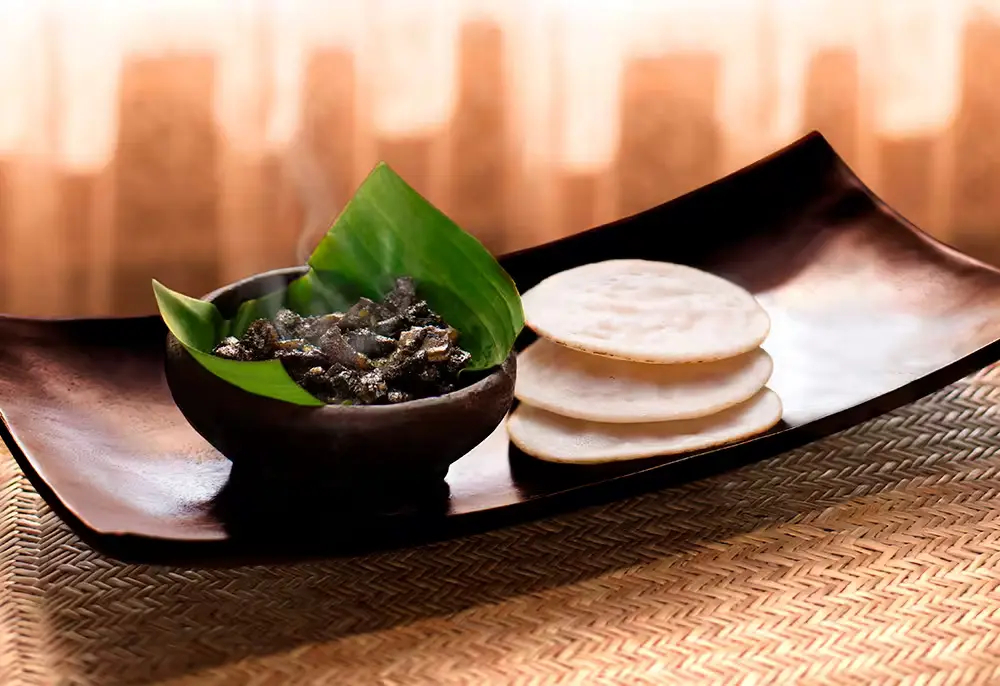
Made with rice and pork, Jadoh is usually paired with Dohkhleh, a form of pork salad and Tungrymbai, fermented soybeans cooked with black sesame seeds. Khasi cuisine is characterised by minimal usage of spices and grease, yet this enticing dish bursts with rich flavour from the Tyngrymbai and black sesame seeds.
- Jingbam Dihsha:
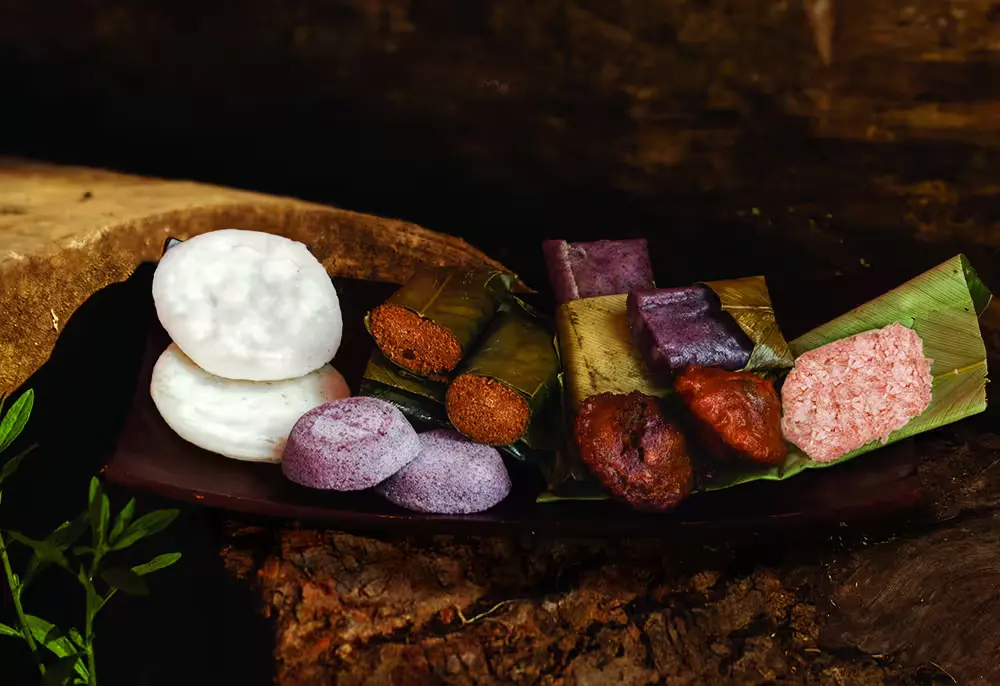
An array of snacks is made from simple ingredients such as ground rice powder, water, and sugar or jaggery. Best served with a hot cup of red tea, this wholesome goodness comes in the form of Ja Shulia or sticky rice, Pu Khlein or fried rice cake, Pu Maloi or steamed rice cake, Pu Sla or rice cake steamed in a leaf, Pu doh or steamed rice cake with pork strips and rice cake.
- Ktung Bain Nei-Iong:
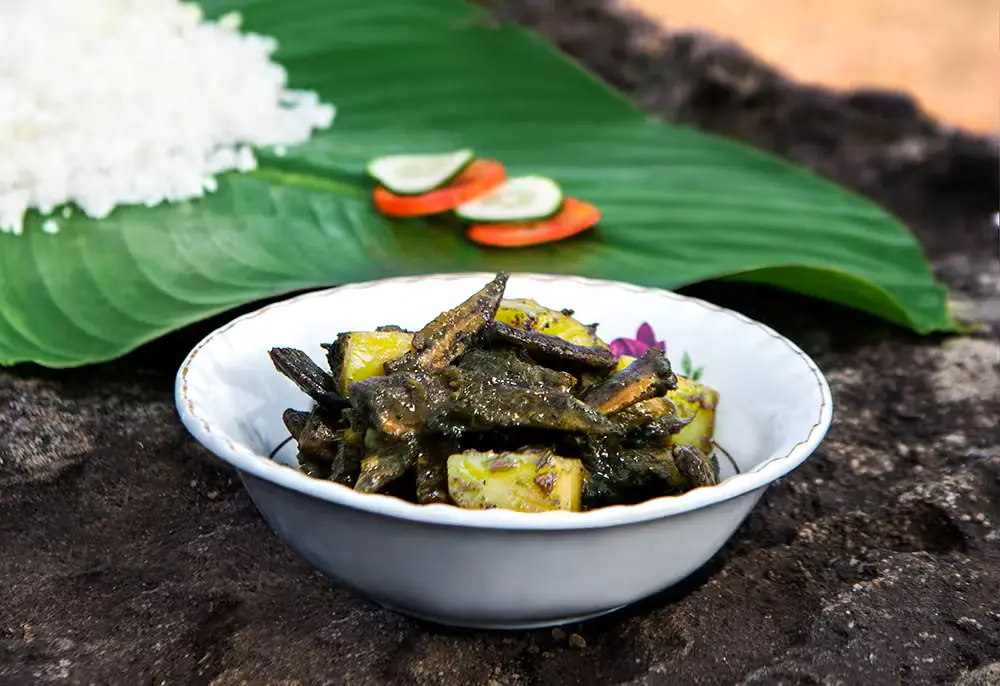
A delightful dish made of Ktung Bain, a variety of dry fish, cooked with black sesame seeds, is often paired with rice as a side dish. Deeply savoury, the aroma of dry fish carries a briny sharpness with a bold umami depth in every bite.
- Phan and Tungtap:
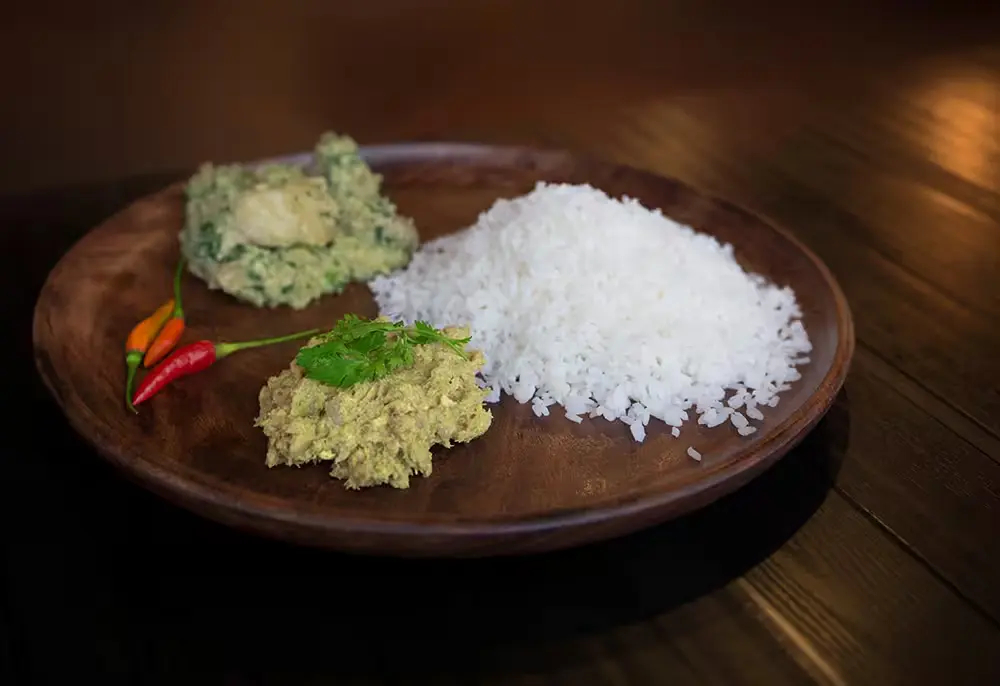
Fermented dry fish chutney or Tungtap, eaten with boiled potatoes or Phan, is a spicy treat that brings out the fermented undertones of Tungtap and is balanced with the sweetness of the potatoes. Hot red tea is usually accompanied and relished to wash it down.
- Ja Tyndong:
Farmers in rural areas commonly cook food in bamboo tubes. Rice, fish, meat, and vegetables are put into a fresh bamboo tube with enough water and spices, sealed with banana leaves, and baked on fire until the bamboo is slightly charred.

Garo Cuisine
- Nakham Bitchi:
Dry fish is an integral part of Garo cuisine, and Na∙kam Bitchi, or dry fish gravy, is a much sought-after delicacy. Served with rice, the spiciness of this dish adds to its tantalising flavour.
- Do’o Kappa:
An enticing dish popular in most Garo homes, Do∙o Kapa is a chicken dish cooked with natural potash. Usually served with rice, it is further enhanced by adding fresh herbs like coriander and chillies.
- Wak Pura:
This traditional pork dish is made with Pura, a traditional potash made by burning plant material or dried banana stems and collecting the ash. The potash softens the pork, giving it a smooth texture with a mild alkaline note. Cooked with minimal spice, this dish allows the natural flavour of the pork to shine through.
- Me.kin/Sobok Chatni:
Chutney made with banana flowers is served as an accompaniment to most Garo meals. Rich in nutritional value, this side dish is an enjoyable treat.
Jaintia Cuisine
- Doh Khleh:
Pork salad with simple mixtures, including onions, green chillies, and salt, is a delightful side dish with a healthy twist. It is easy to prepare, refreshing, and is commonly found in food stalls across the state.
- Putharo with Dohjem:
Putharo is a soft, spongy flatbread made from ground rice flour and steamed in a black pot specially used for making Putharo. It is best paired with Dohjem, a pork curry made with black sesame seeds. This combination is much loved and truly fulfilling.
- ‘Kharang:
The Dakharang, Kharang, or smoked fish, is popular among the Jaintias. Prepared as a curry, chutney, or salad, the smokiness of the Kharang, often served with rice, leaves a lingering, palatable taste in the mouth.
- Doh Sniang Nei-Iong:
Doh sniang Nei-Iong or pork cooked with sesame seeds is a common dish in most Pnar homes. Served with steamed rice, the distinct nutty flavour adds a rich, earthy depth that makes it both comforting and memorable.
Indigenous Preparation Techniques
- Smoking:
Smoking is a cherished technique for preserving and flavouring meats like pork, beef, and kharang (dried fish). Smoked pork and beef are staples in Khasi and Garo kitchens, enriching curries with a deep, rustic aroma, while kharang adds a robust, smoky essence to chutneys and side dishes.
- Fermentation:
Fermentation is central to Meghalaya’s culinary identity. It creates distinctive staples like tungrymbai (fermented soybean) and pickled bamboo shoots, adding pungent, complex layers to everyday meals.
- Cooking with Bamboo:
Cooking rice, fish, or meat inside fresh bamboo tubes over a fire imparts a subtle, forest-like aroma, celebrating the region’s bamboo-rich landscapes.
- Alkaline Cooking:
Communities prepare potash from burnt plant ashes to tenderise pork and greens. This ancestral practice imparts a mild bitterness and velvety texture to traditional Garo and Khasi dishes.
- Stone Cooking:
Hot river stones are used to grill fish or simmer meat stews. This ancient, resourceful method infuses food with a rustic smokiness tied to the land.