
Rhythm of Meghalaya
The folk songs of the state’s three major tribes—Khasi, Jaintia, and Garo—echo their agrarian traditions, deep connection to the natural world, and distinct matrilineal practices. Sung in unison, folk tradition in Meghalaya plays an integral part in social gatherings, weddings, rituals, and festivals. Rooted in ancient oral tradition, these songs preserve ancestral knowledge while simultaneously evolving with time, blending seamlessly with newer musical genres as the communities grow and develop.
Instruments
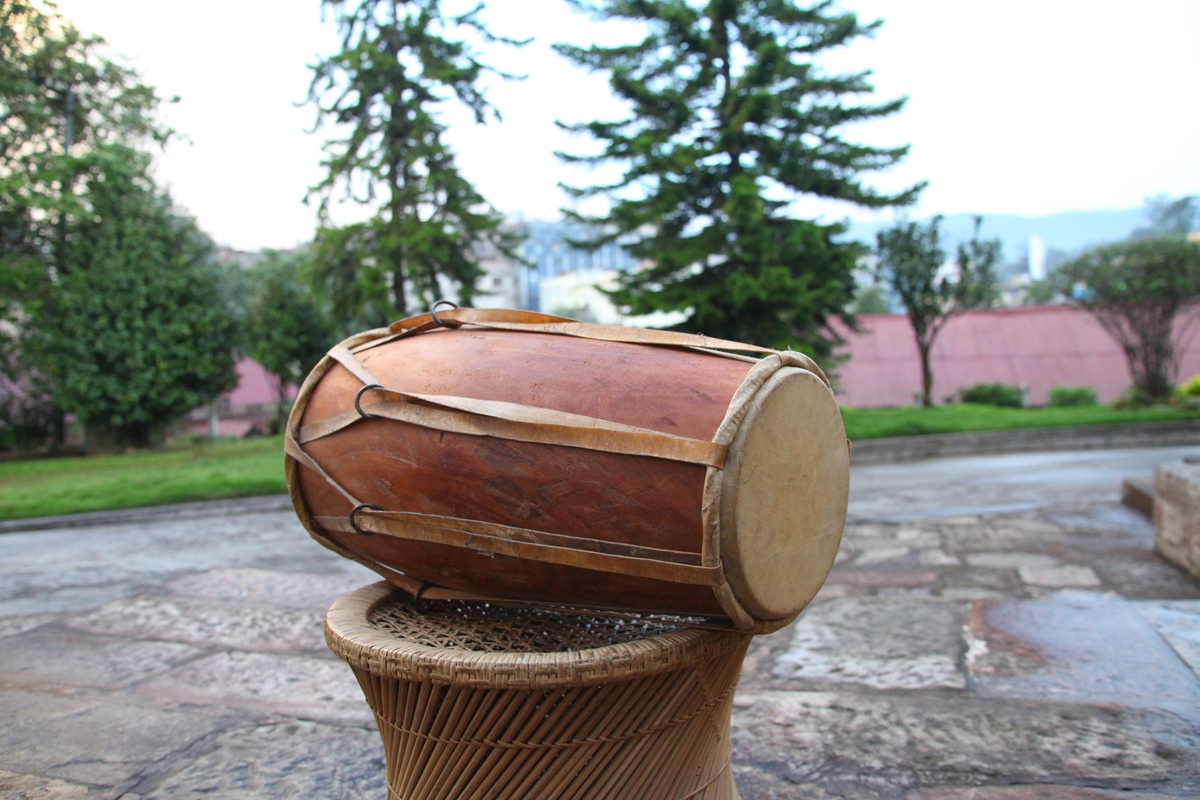
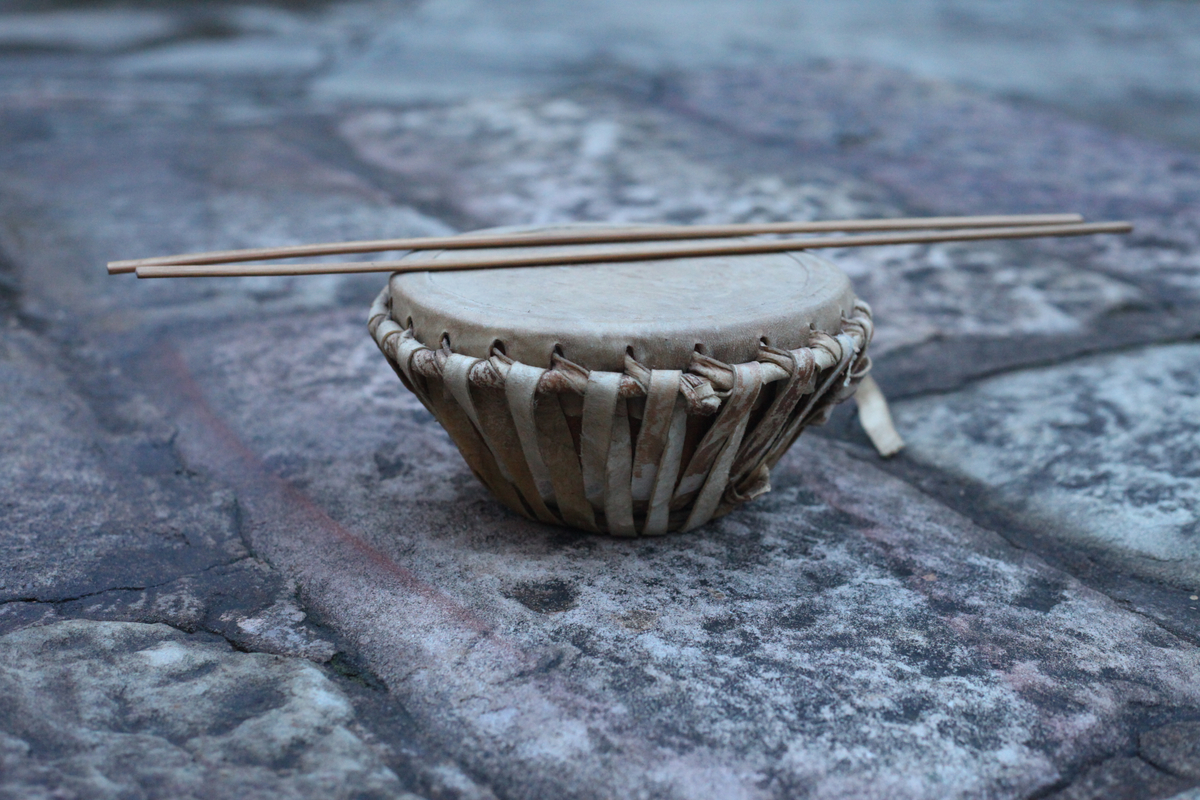
Dama Drum
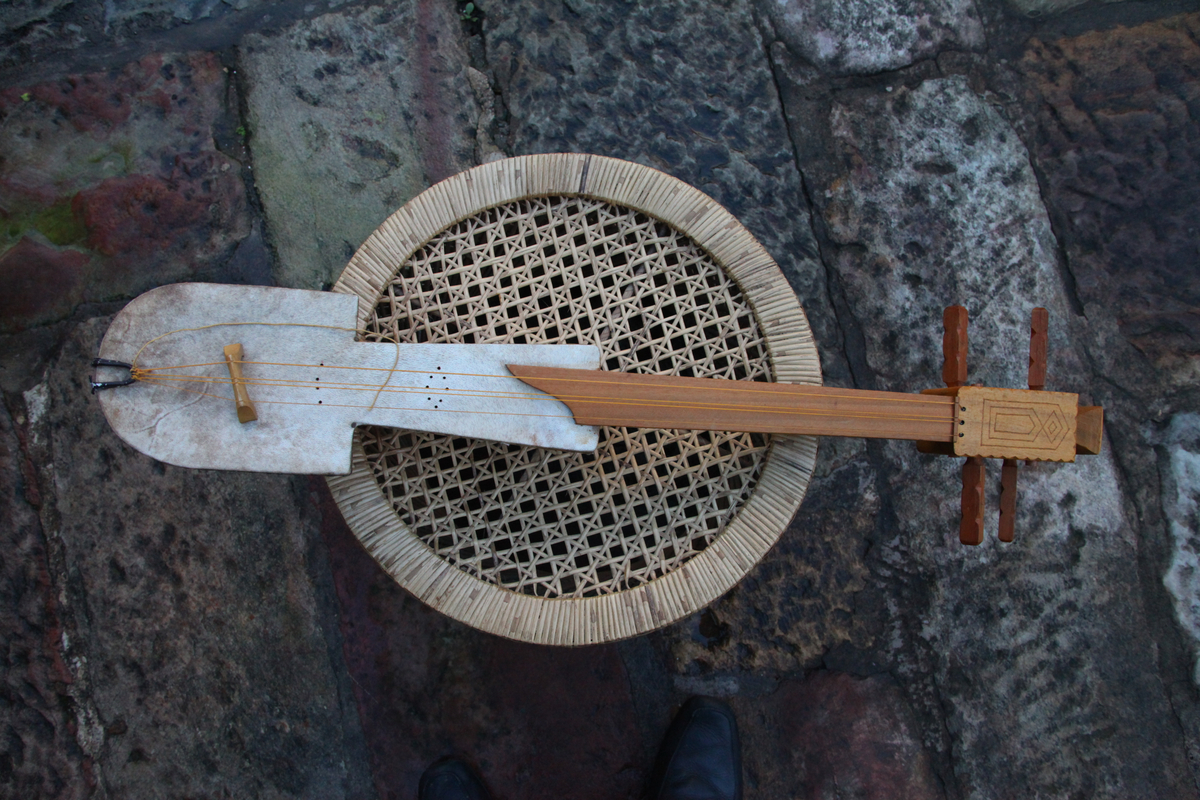
Ka Duitara
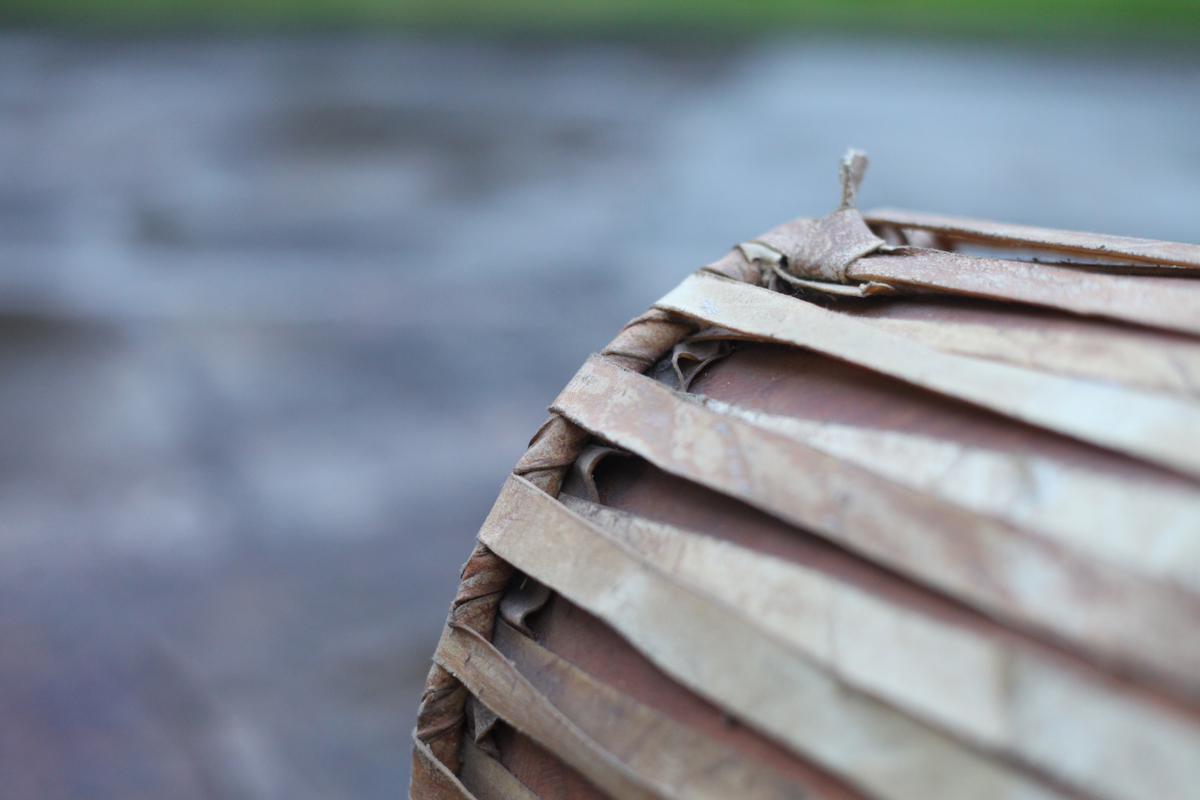
Ka ksing
Featured Instruments
Damas
A 4-5 feet cylindrical, narrow wooden drum, traditionally carved from a single log of wood and covered with animal hide. The Damas is central to the Garo traditional dances like the Wangala Festival.
Kram
It is one of the oldest and most important percussion instruments. It is a larger wooden log drum used primarily by the Garos. It produces deep, resonant sounds.
Ksing lum paid
An essential instrument in Khasi traditional music ensembles, this drum is beaten to signal the beginning of the dance.
Ksing Shynrang
A traditional male drum of the Khasi tribe, made of wood, leather, and parchment. This instrument is mainly used in cultural and religious festivals.
Ksing Dum Dum
It is part of the broader family of “ksing” (drum) in Khasi musical tradition, commonly played during rituals and dances. Its booming sound is symbolic of earthly power.
Duitara
A traditional four-stringed musical instrument that resembles a guitar, the Duitara is handcrafted from local wood, shaped with a rounded back and flat front.
Musical Instruments
Nakra
Played with curved sticks, creating deep, booming sounds
Kakwa or Kynshaw
Played by beating two cymbals together
Nenggilsi
Played by hitting two cymbals against each other in tune with other instruments
Majra
Played by striking the cymbals together to form an ensemble with drums and flutes
Tongmuri
Played by tapping its strings and side joints with a light bamboo or wooden sliver.
Marynthing
Played with the help of a bow
Dienphong
Played in accompaniment to a song or a tune
Ilongma
Flute with only three steps
Imbingi
Flute with a square hole mouth-piece
Tanglod
Flute having both the noisha and reed affixed to it
Besli
Flute with seven finger holes
Adil
Trumpet made out of the top of a buffalo’s horn
Singga
Trumpet made of buffalo’s horn
Ronsing
Trumpet with a small opening on its two ends
Turoi
Trumpet made of solid brass with a broad rim
Chordophonic Instruments
Maryngod
Known as the “mourning fiddle” this is an indigenous violin-like instrument central in mourning rituals and is considered sacred.
Sarong
Similar in form and playing style to instruments like the duitara and the maryngod, the Sarong is used as a folk music accompaniment, suited to intimate or ritual settings.
Wind Instruments
Otokra
A traditional Garo bamboo flute, known for its deep, resonant tone and simple design.
Bagchi (Bangsi)
Also known as bangsi, it is commonly played in folk songs and rituals. It is a go-to instrument for spontaneous musical moments.
Tangmuri
A double-reed wind instrument made of a single piece of wood, the Tangmuri delivers a very high-pitched sound when played.
Sharati
A distinctive traditional flute of the Khasis, this instrument produces soft yet haunting tunes. It is one of the most iconic instruments in Khasi culture.